
Cash flow management is essential for every business—it’s the lifeblood that keeps operations running smoothly.
Understanding and controlling the timing and amount of cash flowing in and out allows you to seize opportunities and navigate challenges effectively. This article presents 15 powerful tips across five key areas to help you master cash flow management. By keeping precise records and planning for the future, you can ensure financial stability and support business growth. Effective cash flow management involves monitoring income and expenses, managing accounts receivable and payable, and making informed decisions. Striking the right balance between too much idle cash and insufficient funds is crucial for seizing growth opportunities while meeting obligations.
Mastering cash flow management not only stabilises your business but positions it for long-term success. Ready to tackle your cash flow challenges?
Book a discovery call with us today and discover the strategies that can keep your business financially healthy!
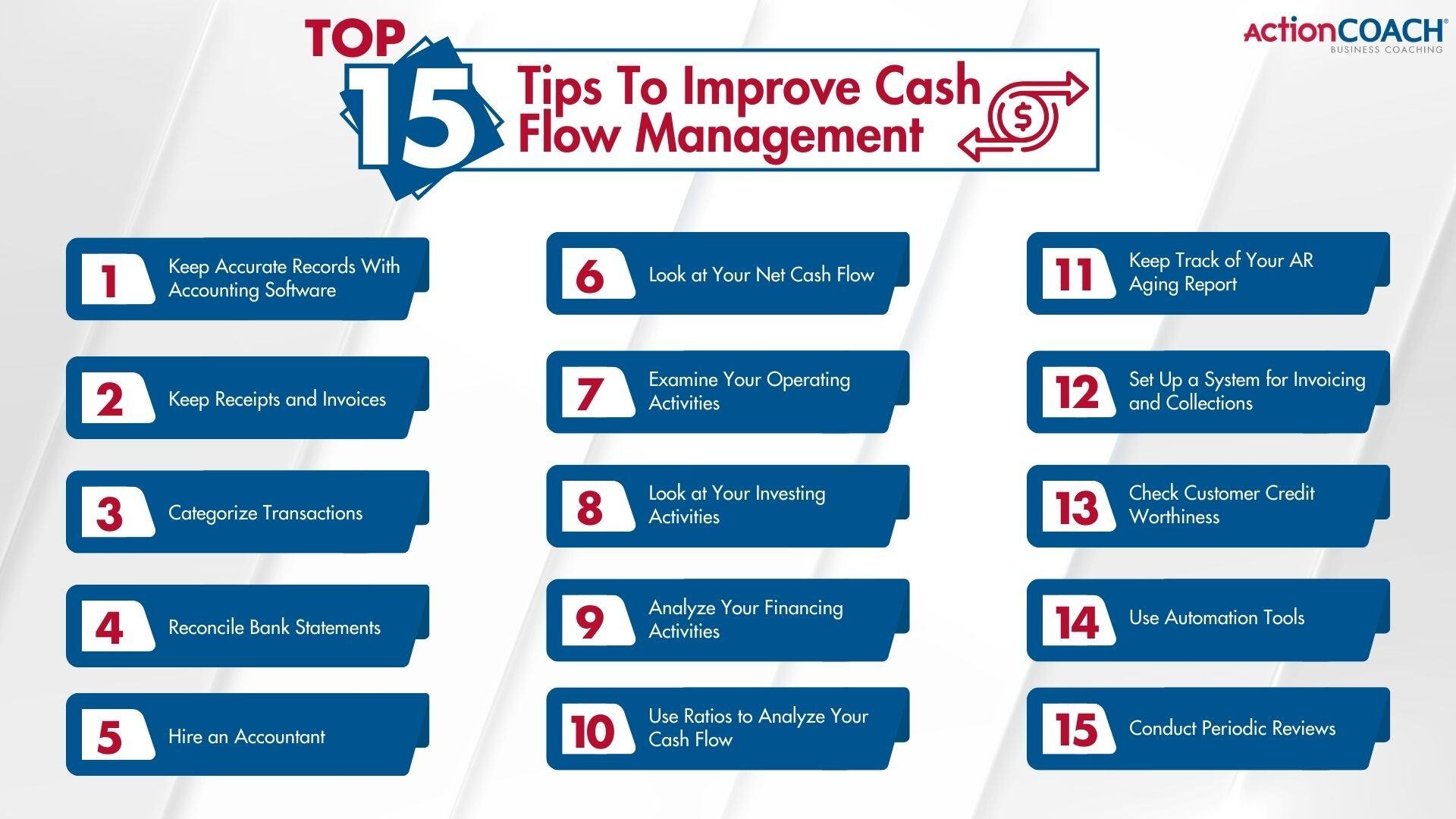
Managing cash flow is essential for any business to ensure smooth operations. Poor cash flow management can hinder your ability to pay suppliers, employees, and creditors. Here are some tips to help you efficiently manage cash flow:
1. Keep Accurate Records With Accounting Software:
Utilise accounting software to automate record-keeping, track income and expenses, and minimise errors.
2. Keep Receipts and Invoices:
Organise your receipts and invoices to easily reconcile bank statements and maintain accurate financial records.
3. Categorise Transactions:
Group transactions within your accounting software to better understand spending patterns and improve financial insights.
4. Reconcile Bank Statements:
Regularly compare bank statements with your records to catch discrepancies and ensure accurate cash flow information.
5. Hire an Accountant:
An accountant can provide expert advice on record-keeping and cash flow analysis, helping you make informed financial decisions.
6. Look at Your Net Cash Flow:
Monitor your net cash flow to understand the balance between cash inflows and outflows, allowing for better financial adjustments.
7. Examine Your Operating Activities:
Analyse daily operations to identify trends in cash inflows and outflows, helping you make necessary adjustments.
8. Look at Your Investing Activities:
Review investments in long-term assets to assess their impact on cash flow. By implementing these strategies, you can improve your cash flow management and position your business for success.
9. Analyse Your Financing Activities
Examine how you fund your business through loans or equity to ensure you’re using efficient financing methods, such as restructuring high-interest loans to improve cash flow. This analysis can uncover opportunities for cost reduction and enhance your financial health.
10. Use Ratios to Analyse Cash Flow
Utilise cash flow ratios like operating cash flow and the cash conversion cycle to measure efficiency and gain insights into cash flow management. Regularly evaluating these ratios helps make data-driven decisions for optimising cash flow.
Monitor Accounts Receivable Effective management of accounts receivable (AR) is essential for healthy cash flow.
Track AR to ensure timely payments and meet financial obligations.
11.0 Keep Track of Your AR Aging Report
Monitor your AR aging report to identify overdue invoices. This proactive approach allows for early intervention in collecting payments and maintaining a steady cash inflow.
12.0 Set Up a System for Invoicing and Collections
Implement a clear invoicing and collections system to clarify payment terms and increase the likelihood of timely payments. A solid system supports overall financial stability.
13.0 Check Customer Credit Worthiness
Review customers’ credit histories before extending credit to minimise the risk of defaults, thus maintaining a healthy cash flow.
14.0 Use Automation Tools
Employ accounting software and payment processing tools to automate invoicing and collections, reducing errors and saving time. This improves cash flow management.
15.0 Conduct Periodic Review
Effective cash flow management is essential for the growth and stability of your business.
The key strategies covered here are foundational for financial health.
Integrate and Adapt
Proactive planning and flexibility are crucial. By incorporating solid cash flow practices, you can address current challenges and prepare for future opportunities.
Financial Stability and Growth
Accurate record-keeping and regular cash flow analysis provide insights needed for informed decision-making. Tracking accounts receivable ensures timely payments.
Strategic Expense Control
Manage expenses strategically to maintain financial control. Identifying areas for cost reduction allows for reinvestment in growth, optimising your cash flow.
Drive Your Business Forward
Enhanced financial practices drive progress, enabling you to seize growth opportunities and secure your business’s future.
Ready to Transform Your Cash Flow?
Master cash flow management with these essential tips to keep your business healthy and thriving. For more in-depth strategies, read the full e-book and discover how to make cash flow work for you. Regularly assess your accounts receivable to spot areas for improvement and ensure efficient cash flow management. This vigilance supports financial stability and growth.