In today’s digital age, having a strong online presence is vital for making an impact through targeted marketing strategies. An effective digital marketing approach allows you to engage with customers anytime, sharing content that drives conversions and builds loyalty. It’s about creating meaningful relationships and long-term trust.
Digital marketing provides a level playing field for both seasoned entrepreneurs and newcomers, enabling you to leverage tools that resonate with your audience. So, let’s explore the potential for your brand together. With the right strategy and a focus on delivering value, you can achieve success and transform your industry.
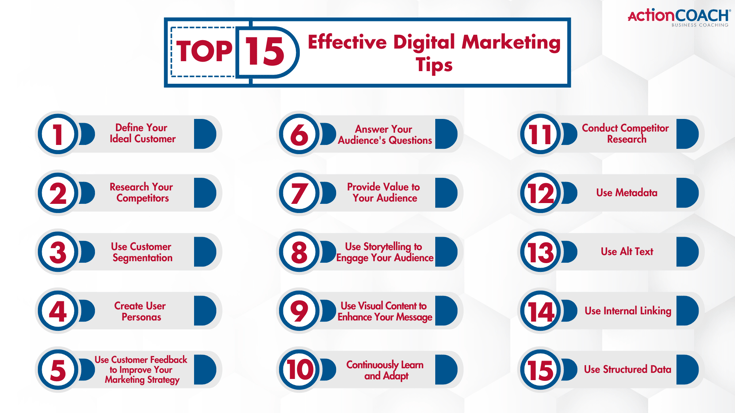
Know Your Audience For A Successful Digital Marketing Strategy
Understanding your audience is essential for effective digital marketing. Here are five strategies to master this process, inspired by Marcus Sheridan’s insights:
1. Define Your Ideal Customer:
Identify the characteristics of your perfect customer, including their pain points and interests. This clarity allows you to tailor your marketing efforts and convert interest into action.
2. Research Your Competitors:
Analyse your competitors’ marketing strategies and content to gain insights into your target audience’s preferences. Discovering their weaknesses allows you to differentiate your campaigns.
3. Use Customer Segmentation:
Segment your audience based on demographics and behaviours. This enables you to create targeted campaigns that address the unique needs of each group, boosting conversions.
4. Create User Personas:
Develop detailed user personas based on research to understand your audience’s goals and motivations. This helps in crafting targeted campaigns that resonate and enhance engagement.
5. Use Customer Feedback:
Incorporate customer feedback into your marketing strategy. This practice builds trust and helps you refine your campaigns to better meet audience needs, driving higher conversions.
Create High-Quality Content For Your Target Audience
To excel in digital marketing, creating compelling content is key. Here are five strategies to ensure your content resonates:
6: Answer Your Audience’s Questions:
Addressing queries establishes trust and positions you as an industry expert.
7: Provide Value:
Delivering valuable insights builds authority and a loyal audience base, leading to increased conversions.
8: Use Storytelling:
Engaging your audience through storytelling creates emotional connections, effectively communicating your brand’s values.
9: Use Visual Content to Enhance Your Message
Visual content is critical in today’s digital landscape. From images to videos to infographics, visuals make your message more engaging and easier to understand. They help convey complex information and ideas effectively, keeping your audience hooked and more likely to convert. Marcus Sheridan highlights the importance of high-quality visual content for digital marketing success. By incorporating visuals, you enhance your message and create a more compelling content experience. This is a key tactic in social media marketing.
10: Continuously Learn and Adapt
In digital marketing, continuous learning and adaptation are crucial. As your brand grows, your audience’s needs and behaviors change. To stay relevant, you must adapt your content strategy accordingly. This ongoing learning process allows you to produce quality content that speaks to your audience and drives conversions. Marcus Sheridan emphasizes the importance of this adaptability in his book: “If you want to be successful in digital marketing, you need to be constantly learning and adapting.” Analyze your content’s performance using digital marketing tools and use that data to refine your strategy. This approach ensures your content remains effective and aligned with your audience’s evolving needs.
Optimize for Search Engines
Search engine optimization (SEO) is the cornerstone of any successful digital marketing strategy, complemented by social media marketing. Imagine having a store in the middle of a bustling city but with no signage or advertisements pointing to its location. That’s what a website without SEO is like: nearly invisible. As you optimize your website and content for search engines, you transform it into a magnet for visitors, boosting its visibility and driving a surge of traffic. This means more potential customers discovering your brand, engaging with your content, and ultimately, converting into loyal clients.
11: Conduct Competitor Research
The first step to optimizing for search engines is to conduct competitor research. Dive deep into competitors’ websites and content. By doing this, you can uncover valuable insights into their SEO strategies. What keywords are they targeting? How are they structuring their content? According to Marcus Sheridan, the key to success in digital marketing is understanding your competitors. “It’s crucial to grasp what your competitors are doing in terms of content and keyword strategy,” he says. This knowledge will help you identify areas where you can enhance your SEO tactics and optimize your website more effectively.
12: Use Metadata
Metadata is the behind-the-scenes information in your website’s HTML code, including page titles and descriptions. Search engines rely on this data to understand your content. By optimizing your site’s metadata, you can significantly boost your visibility in search engine results pages (SERPs) and drive more traffic to your website. Marcus Sheridan’s “They Ask, You Answer” emphasizes using descriptive and relevant page titles and descriptions for successful digital marketing. This small tweak can greatly impact how search engines and users perceive your site.
13: Use Alt Text
Alt text is the text that describes images on your website. It might seem like a small detail, but it’s crucial for improving your site’s image search results and increasing traffic. Marcus Sheridan explains in his book that alt text should be both descriptive and relevant. Descriptive alt text gives search engines a clear understanding of your content, making your site more visible in image searches. When done correctly, this simple element can enhance your SEO efforts and make your site more accessible to all users.
14: Use Internal Linking
Internal linking is a powerful yet often underutilized tool for SEO. Linking pages within your site to each other not only improves your site’s structure but also enhances the user experience. It helps distribute link equity across your site, leading to higher rankings in SERPs. “They Ask, You Answer” highlights the importance of a robust internal linking structure. As you strategically link related content, you can guide visitors through your site, keeping them engaged and improving your chances of conversion.
15: Use Structured Data
Structured data is code that provides additional context about the content on your site to search engines. Using structured data can help your website rank higher in SERPs and provide a better user experience for your visitors. Marcus Sheridan notes that using structured data is essential for digital marketing success. It makes your content more discoverable and easier for search engines to index, which can lead to higher rankings and more traffic. By implementing structured data, you’re giving search engines a clearer picture of your content, which can set you apart from the competition.
To effectively reach a global audience and engage customers, leverage social media, search engines, and digital platforms. These tools enhance visibility and accessibility for your brand. Digital marketing should also be cost-effective. With the right strategy, you can optimize budgets to ensure a measurable return on investment, making it smart business. Building brand authority is another advantage of a solid digital marketing strategy. By delivering valuable and engaging content, you foster customer loyalty and trust, positioning yourself as an industry leader. Additionally, the flexibility of digital marketing allows you to adapt to changing consumer behaviours and trends, keeping your brand relevant. Staying agile in response to market changes is crucial for long-term success.